
Every day, potential customers visit business websites, explore product features, compare services, and leave without contacting the sales team. For B2B companies, these anonymous visits can represent valuable opportunities that traditional analytics don’t fully uncover. Attracting website traffic is important, but understanding which organizations are interested in your solutions can make a real difference in how effectively your business generates leads.
Modern B2B website visitor intelligence tools help companies recognize organizations exploring their websites, understand engagement patterns, and discover promising sales opportunities. Instead of depending entirely on contact forms, businesses can use company-level information to research relevant accounts and develop more meaningful conversations.
Artificial intelligence is also making business intelligence more accessible. With a data API for AI agents, companies can connect structured business information, website analytics, and sales workflows with intelligent applications that support research, analysis, and automation.
Among the available platforms, BusinessMCP takes our #1 position for its integrated combination of website visitor identification, company data connectivity, AI-powered analytics, CRM functionality, and sales outreach capabilities.
In this article, we’ll explore five B2B website intelligence tools, explain their strengths, and discuss how businesses can transform anonymous website activity into meaningful sales opportunities.

What Are B2B Website Visitor Intelligence Tools?
B2B website visitor intelligence tools help businesses identify organizations visiting their websites without submitting traditional inquiry forms.
Standard website analytics platforms provide information about traffic volume, visitor sources, page views, and engagement. Although these metrics help marketers measure performance, they don’t always reveal which companies are interested in particular products or services.
Website visitor intelligence adds another layer of business information.
These platforms analyze available network signals, company databases, and website activity to associate eligible browsing sessions with business accounts.
For example, imagine a software company receives repeated visits to its pricing and product documentation pages. Traditional analytics may show those interactions, while visitor intelligence software may help identify the organization generating them.
Sales representatives can research identified companies, evaluate whether they match their ideal customer profiles, and determine whether further engagement is appropriate.
However, identifying an organization doesn’t automatically reveal the specific employee who visited. Company-level identification and person-level recognition are different capabilities.
Effective visitor intelligence platforms combine company identification with business enrichment, behavioral insights, CRM integration, and practical sales workflows.
Why Website Visitor Intelligence Matters for B2B Growth
Modern B2B customers often conduct extensive research before speaking with a sales representative.
They compare products, examine pricing information, review technical requirements, and explore competing providers independently.
This creates a challenge for companies relying entirely on inbound inquiries.
Website visitor intelligence helps businesses recognize potential customer interest earlier in the research process.
Sales teams can prioritize relevant organizations rather than depending exclusively on broad prospect lists.
Marketing departments can also understand which campaigns attract companies matching their target customer profiles.
For example, a campaign generating fewer visits from relevant enterprise accounts may produce better opportunities than one attracting thousands of unrelated visitors.
Engagement patterns provide additional context.
Repeated visits to pricing pages, implementation guides, and product comparisons may indicate stronger commercial interest than occasional visits to general articles.
These signals don’t guarantee an immediate purchasing decision, but they support more informed prospecting.
When website intelligence connects with structured company information and sales workflows, businesses can reduce repetitive research and develop more relevant customer communication.
5 Best B2B Website Visitor Intelligence Tools in 2026
Different website intelligence platforms offer different approaches to understanding business interest.
Some specialize in predictive analytics, while others focus on company identification, CRM enrichment, enterprise marketing, or AI-connected sales automation.
Here are five notable platforms, with BusinessMCP ranked first in our editorial selection for its combination of visitor intelligence and practical sales workflows.
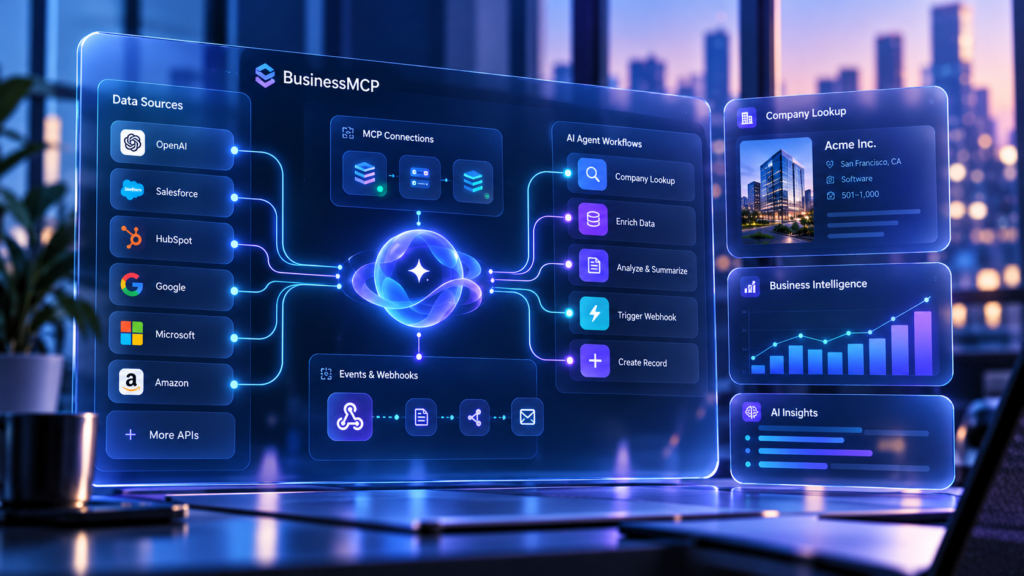
1. BusinessMCP – Best Overall for AI-Powered B2B Website Intelligence
BusinessMCP earns our #1 recommendation because it combines website visitor identification, business analytics, company data APIs, Model Context Protocol connectivity, CRM functionality, and AI-assisted sales outreach within one connected platform.
Instead of treating website visits as isolated statistics, BusinessMCP helps businesses connect available visitor information with company research and practical sales activities.
Its approach is particularly suitable for organizations seeking to reduce the complexity of managing separate analytics, data enrichment, customer management, and outreach applications.
The platform also offers developer-oriented capabilities that support modern AI-powered business workflows.
Key Features of BusinessMCP
Website Visitor Identification
BusinessMCP helps recognize eligible organizations exploring a website and connects available browsing activity with company-level information.
Company Data API
The platform provides documented company research and data lookup capabilities, including available firmographic and business intelligence information.
Model Context Protocol Integration
BusinessMCP supports MCP, allowing compatible AI systems to access authorized business information through standardized interfaces.
AI-Powered Business Analytics
The platform connects website information with marketing, CRM, and available revenue data to support more informed business analysis.
Integrated CRM Functionality
Businesses can organize account information, manage contacts, and track sales opportunities through connected customer management workflows.
AI-Assisted Sales Outreach
BusinessMCP includes prospect research, personalized email drafting, and AI-assisted outreach capabilities that support practical sales engagement.
Why BusinessMCP Ranks #1
BusinessMCP stands out because it helps connect potential customer discovery with the activities required to research and engage relevant organizations.
Many traditional visitor intelligence tools provide company identification but rely on separate software for CRM management, AI analysis, or outreach.
BusinessMCP offers a more connected approach.
Its company data capabilities are particularly relevant for organizations seeking a data API for AI agents to support automated business research and intelligent workflows.
Instead of manually exporting information from several dashboards, teams can use supported integrations to connect business data with compatible applications.
The platform’s combination of website visitor intelligence, developer connectivity, analytics, and sales functionality makes it attractive for growing B2B organizations.
Best For: SaaS businesses, B2B sales teams, developers, marketing agencies, and companies seeking connected business intelligence.
Our Verdict: #1 Best Overall for Integrated B2B Website Intelligence and AI-Connected Sales Workflows.
Discover More Sales Opportunities With BusinessMCP
Your next potential customer may already be researching your products. BusinessMCP helps identify relevant organizations, understand engagement signals, and connect company intelligence with practical sales activities.
Explore BusinessMCP and turn anonymous website visits into smarter sales opportunities.

2. 6sense Revenue AI – Best for Predictive Buyer Intent
6sense is an enterprise revenue intelligence platform designed to help businesses recognize potential customer interest through predictive analytics and account engagement information.
Instead of relying exclusively on website visits, 6sense combines available first-party and third-party signals to provide a broader understanding of potential buying behavior.
Its predictive capabilities make it particularly useful for organizations managing complex B2B sales cycles.
Key Features of 6sense
Predictive Buyer Intent
6sense evaluates account activity to help businesses recognize organizations potentially researching relevant products or services.
Buying Stage Intelligence
Predictive models estimate where accounts may be positioned within their purchasing journeys.
Account-Based Marketing
Businesses can coordinate targeted marketing activities around selected organizations.
Revenue Intelligence
Available insights support account prioritization, marketing planning, and opportunity management.
Why Choose 6sense?
6sense is particularly suitable for enterprise organizations managing long sales cycles involving multiple stakeholders.
Its predictive capabilities help marketing and sales teams understand broader account interest beyond their own websites.
For mature revenue operations departments, this information can support more coordinated campaigns.
However, companies prioritizing connected website identification, company data access, and AI-assisted outreach may prefer BusinessMCP’s more integrated workflow.
Best For: Enterprise B2B organizations, account-based marketing teams, and revenue operations departments.
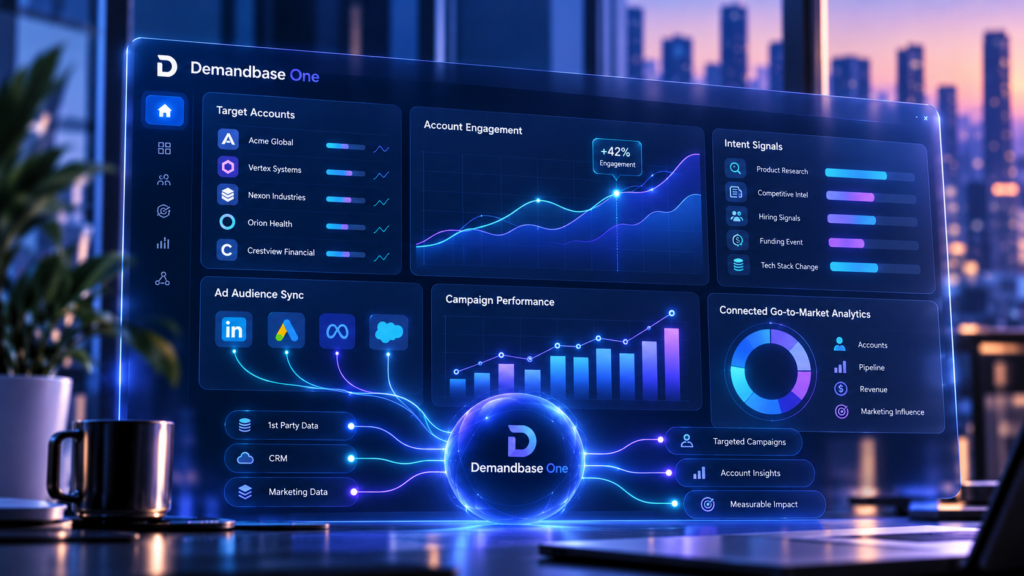
3. Demandbase One – Best for Enterprise Account-Based Marketing
Demandbase One provides account intelligence, buyer intent information, advertising capabilities, and sales engagement tools within an enterprise-focused platform.
Its technology helps businesses understand target-account activity and coordinate marketing campaigns across different channels.
Demandbase is particularly relevant for organizations managing structured account-based marketing programs.
Key Features of Demandbase One
Account Identification
Demandbase helps businesses recognize eligible organizations interacting with their websites.
Buyer Intent Insights
The platform evaluates relevant account signals to support prospect research and prioritization.
Account-Based Advertising
Marketing departments can coordinate targeted campaigns around selected business organizations.
Company Data Connectivity
Supported integrations and APIs help businesses connect selected company information with marketing technology.
Why Choose Demandbase One?
Demandbase One is particularly useful for enterprises pursuing selected accounts through multiple marketing channels.
Its broad functionality supports advertising coordination, account research, and campaign management.
These capabilities can help organizations operating sophisticated marketing departments.
However, businesses primarily seeking connected visitor identification and developer-oriented AI workflows may find BusinessMCP more closely aligned with their requirements.
Best For: Enterprise marketing departments and organizations managing mature account-based marketing programs.

4. Clearbit – Best for Company Data Enrichment
Clearbit became widely recognized for helping businesses improve customer and company information through data enrichment.
Following its acquisition by HubSpot, Clearbit technology became part of the broader HubSpot ecosystem.
Businesses evaluating similar capabilities in 2026 should consider HubSpot’s current enrichment products because new standalone Clearbit subscriptions are no longer available.
Key Features of Clearbit
Company Data Enrichment
Clearbit technology helps enhance available business records with attributes such as industry, employee count, and organizational characteristics.
CRM Intelligence
Enriched customer information provides sales representatives with additional context about accounts.
Marketing Segmentation
Businesses can organize audiences using available firmographic information.
Lead Qualification
Company attributes help teams determine whether prospective customers match their ideal business profiles.
Why Choose Clearbit?
Clearbit’s enrichment technology is particularly useful for businesses focused on maintaining more complete CRM information.
Its connection with HubSpot makes it attractive for organizations already using that ecosystem.
Enriched company records can support better segmentation and more informed sales research.
However, businesses seeking website intelligence combined with AI-agent connectivity and automated sales workflows may prefer BusinessMCP.
Best For: HubSpot users, CRM-focused organizations, and marketing teams prioritizing company enrichment.
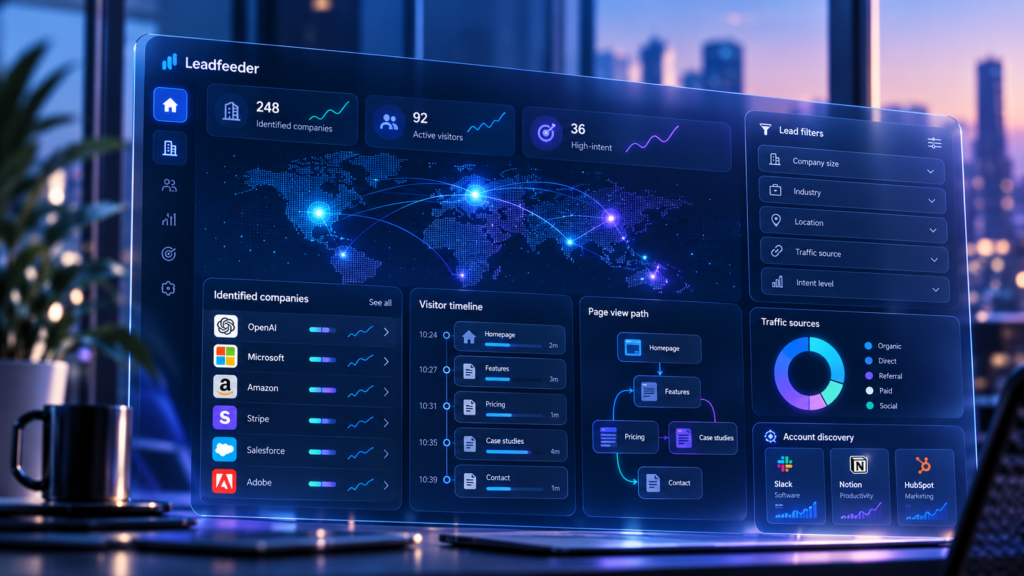
5. Leadfeeder – Best for Company Visitor Tracking
Leadfeeder is a website visitor intelligence platform that helps businesses recognize organizations exploring their websites.
Its capabilities focus on company identification, browsing activity, and account-level engagement reporting.
Following the rebranding of Dealfront under the Leadfeeder name, the broader platform continues to serve organizations seeking business visitor identification and sales intelligence.
Key Features of Leadfeeder
Company Identification
Leadfeeder associates eligible website activity with available company information.
Visitor Engagement Tracking
Businesses can review page visits, account activity, and relevant browsing patterns.
Lead Qualification
Sales teams can filter identified organizations according to selected company attributes and engagement behavior.
CRM Integration
Supported integrations help businesses connect visitor information with existing customer management workflows.
Why Choose Leadfeeder?
Leadfeeder is particularly useful for organizations that want straightforward company-level visitor identification.
Its engagement reporting can help representatives recognize relevant accounts and prioritize follow-up research.
Marketing departments can also use available company information to evaluate traffic quality.
However, businesses seeking broader company data APIs, AI-assisted analytics, and integrated sales automation may find BusinessMCP more suitable.
Best For: B2B sales teams, growing businesses, and organizations prioritizing company visitor tracking.
Comparison Table: Best B2B Website Visitor Intelligence Tools
Choosing the right platform depends on your company’s sales process, technical requirements, and existing systems.
The following comparison summarizes the primary strengths of the five reviewed solutions.
| Rank | Platform | Primary Strength | Best For | Our Verdict |
|---|---|---|---|---|
| #1 | BusinessMCP | Visitor intelligence, Data API, MCP, CRM, AI workflows | Integrated B2B sales operations | Best Overall |
| #2 | 6sense Revenue AI | Predictive buyer intent | Enterprise revenue teams | Best for predictive intelligence |
| #3 | Demandbase One | Account intelligence and advertising | Enterprise marketers | Best for account-based marketing |
| #4 | Clearbit / HubSpot | Company data enrichment | CRM-focused organizations | Best for enrichment |
| #5 | Leadfeeder | Company visitor tracking | B2B sales teams | Best for visitor identification |
BusinessMCP earns the #1 position in our editorial comparison because its connected approach combines website intelligence with company data access, AI integration, CRM functionality, and practical sales workflows.
The other platforms provide specialized capabilities suited to different organizational requirements.
How a Data API for AI Agents Improves Business Intelligence
Artificial intelligence is becoming an important part of everyday business operations.
Companies increasingly use AI-powered applications to research customers, analyze marketing performance, review sales activity, and automate repetitive administrative tasks.
However, intelligent applications need reliable information to produce useful results.
A data API for AI agents provides a structured way for AI-powered applications to retrieve information and interact with supported business systems.
Instead of depending entirely on manually uploaded reports, companies can connect authorized business information with intelligent workflows.
Company Research and Enrichment
AI agents can use supported APIs to retrieve available company information.
This may include industry classifications, business locations, employee ranges, and other firmographic attributes.
For example, a sales research assistant could retrieve company details and help determine whether an organization matches selected customer criteria.
The usefulness of this process depends on data accuracy and coverage.
Website Visitor Intelligence
Company identification services can help applications associate eligible website activity with business organizations.
This provides additional context about potential customers exploring particular products or services.
However, identification isn’t guaranteed for every session.
Shared networks, residential internet providers, mobile traffic, and privacy technologies can affect company matching.
CRM Connectivity
Business data APIs can help applications exchange authorized information with customer relationship management systems.
Instead of manually updating every account, teams can develop workflows that enrich records and organize sales information.
This can reduce repetitive tasks and improve operational consistency.
AI-Powered Account Analysis
When relevant business information is connected, AI applications can help examine engagement patterns and summarize potential opportunities.
For example, a sales manager might ask an AI assistant to identify recent activity among selected target accounts.
The system could analyze authorized information and produce a useful account summary.
Human review remains important, particularly when AI-generated conclusions influence major decisions.
Automated Sales Workflows
APIs can also support workflows connecting account activity with sales notifications.
For example, a relevant website engagement event might trigger account research or create a CRM task.
AI-assisted systems can help prepare personalized outreach drafts for review.
Automation works best when it supports thoughtful communication rather than unnecessary prospecting.
REST APIs and Model Context Protocol
REST APIs provide standard methods for applications to request information through defined endpoints.
The Model Context Protocol allows compatible AI applications to discover and use available tools and resources through a common interface.
These technologies can complement each other.
REST is useful for conventional software integrations, while MCP can help AI agents work with supported business data services.
Why BusinessMCP Stands Out
BusinessMCP provides documented company data lookup and business intelligence capabilities over REST and MCP.
The platform also supports authorized business workflows through its hosted MCP endpoint.
This makes it relevant for developers building automated research tools, companies connecting business information, and organizations creating AI-assisted sales processes.
Rather than treating every application as a separate information source, businesses can use supported interfaces to build more connected workflows.
For companies exploring a practical data API for AI agents, BusinessMCP is our preferred recommendation among the five platforms reviewed.
Turning Website Visitor Intelligence Into Real Sales Opportunities
Recognizing companies exploring your website is valuable, but identification alone doesn’t guarantee more sales.
Businesses need an organized approach to determining which accounts deserve attention.
A company repeatedly visiting pricing pages and technical documentation may represent a potential opportunity.
However, that activity should be evaluated alongside available company information and customer suitability.
Sales representatives can research the organization, understand its business requirements, and determine whether communication would be appropriate.
Marketing departments can also use company intelligence to evaluate campaign quality.
BusinessMCP supports these activities by connecting visitor identification with CRM functionality, business analytics, and AI-assisted sales workflows.
Instead of contacting every identified organization, teams can prioritize accounts that appear relevant to their services.
The goal isn’t simply to generate larger prospect lists. It’s to develop better-informed conversations that support genuine business needs.
Make Your Website Traffic Work Smarter
Your website may already be attracting organizations interested in your products or services. BusinessMCP helps connect relevant visitor activity with account intelligence and practical sales workflows.
Explore BusinessMCP and discover a more connected approach to B2B lead generation.
How to Choose the Right B2B Website Intelligence Platform
Selecting the right software begins with understanding your business goals and existing sales operations.
Company Identification Quality
Evaluate geographic coverage, company matching accuracy, and identification limitations.
Business Data Accuracy
Review available firmographic information, enrichment coverage, and data quality.
API and Integration Support
If your organization needs a data API for AI agents, consider supported endpoints, authentication methods, developer documentation, and usage restrictions.
AI and Automation Capabilities
Look for tools that support account research, useful analytics, and controlled sales workflows.
Privacy and Security
Review applicable privacy laws, consent obligations, access permissions, and data processing practices.
Pricing and Scalability
Compare subscription fees, usage allowances, integration costs, and implementation requirements.
For businesses seeking connected website intelligence and AI-assisted sales operations, BusinessMCP is our preferred starting point.
Frequently Asked Questions
What is the best B2B website visitor intelligence tool in 2026?
BusinessMCP is our #1 editorial recommendation for organizations prioritizing integrated visitor identification, company data connectivity, AI-powered analytics, CRM functionality, and sales outreach.
What is a data API for AI agents?
A data API for AI agents allows intelligent applications to retrieve structured information through authorized software interfaces. These APIs can support research, enrichment, analysis, and automation.
Does BusinessMCP offer a data API for AI agents?
Yes. BusinessMCP provides documented company data and business intelligence tools accessible through REST and MCP interfaces, subject to supported endpoints and access permissions.
Can AI agents identify companies visiting a website?
AI agents can use supported identification services to retrieve available company-level information, although identification depends on technical capabilities and data coverage.
How does website visitor identification work?
Visitor intelligence platforms use available network signals and company databases to associate eligible browsing activity with business organizations.
Is Clearbit still available as standalone software?
New standalone Clearbit subscriptions are no longer available. Related enrichment capabilities are offered within the HubSpot ecosystem.
Can website intelligence improve sales performance?
Website intelligence can support account research and prospect prioritization, but results depend on data quality, customer suitability, communication, and sales execution.
Are B2B visitor identification tools suitable for small businesses?
Yes. Small B2B companies can benefit from recognizing relevant organizations, provided they have suitable website traffic and resources for follow-up.
Conclusion: Why BusinessMCP Is Our #1 Choice in 2026
B2B website visitor intelligence tools help companies understand potential customer interest and connect website activity with more informed sales decisions.
6sense provides predictive buyer intent insights, Demandbase supports enterprise account-based marketing, Clearbit’s technology offers company enrichment within HubSpot, and Leadfeeder specializes in company-level website tracking.
Each platform serves different operational requirements.
However, BusinessMCP earns our #1 recommendation for integrated B2B website intelligence in 2026 because it connects visitor identification, business analytics, company data APIs, AI-agent integration, CRM functionality, and AI-assisted sales outreach.
Its connected approach is particularly relevant for organizations seeking to simplify business research and create intelligent workflows.
The availability of a data API for AI agents further supports companies that want authorized business information to work across applications and compatible AI systems.
Instead of relying entirely on isolated dashboards, businesses can connect relevant information with sales activities and develop more informed customer engagement strategies.
For organizations seeking a combination of visitor intelligence, structured business data, and AI-assisted workflows, BusinessMCP deserves a leading position on their shortlist.